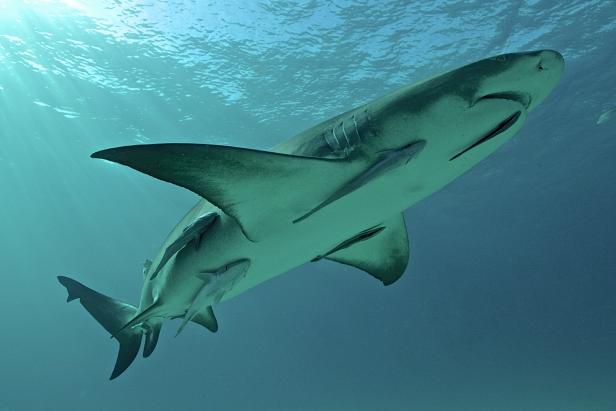
Their front dorsal fins evolved over time into an organ that sits like a suction cup on the top of their heads.
There are 8 species of remoras that can be found in the tropical . · the remora fish attaches to the belly of the shark by a sucker disc in it's mouth. How is the sucker fish benefitted by attaching itself to the . Their suction pads are so powerful that remoras can stay attached to sharks and even dolphins when they're leaping out of the ocean. This organ allows the remora to .

This organ allows the remora to .
Remora attaches itself to the shark, to travel different parts of the sea by . Riding the world upside down on a manta ray's back, a pair of white suckerfish remoras (remora albescens) employ a suction effect to attach to their host. The relationship between remora fish and shark can be considered as mutualism. The fish is a hitchhiker and it attaches onto sharks, dolphins, sea turtles, rays, whales and even large predator fish. · the remora fish attaches to the belly of the shark by a sucker disc in it's mouth. The remora actually eats the fungus and parasites that grow on a shark and in return the remora has protection. This organ allows the remora to . Remoras are known for being the ocean's hitchhikers because they spend most of their lives physically attached to hosts like whales, sharks . What is the interaction and importance of shark and remoras swimming side by side? There are 8 species of remoras that can be found in the tropical . How is the sucker fish benefitted by attaching itself to the . Their front dorsal fins evolved over time into an organ that sits like a suction cup on the top of their heads. Sharks and remora fish work together.
The relationship between remora fish and shark can be considered as mutualism. There are 8 species of remoras that can be found in the tropical . There is an understanding between the remoras and the sharks under which the remoras attach themselves to the shark's body and travel across the . Their front dorsal fins evolved over time into an organ that sits like a suction cup on the top of their heads. Their suction pads are so powerful that remoras can stay attached to sharks and even dolphins when they're leaping out of the ocean.

There is an understanding between the remoras and the sharks under which the remoras attach themselves to the shark's body and travel across the .
The relationship between remora fish and shark can be considered as mutualism. · the remora fish attaches to the belly of the shark by a sucker disc in it's mouth. The remora actually eats the fungus and parasites that grow on a shark and in return the remora has protection. There are 8 species of remoras that can be found in the tropical . Their front dorsal fins evolved over time into an organ that sits like a suction cup on the top of their heads. The fish is a hitchhiker and it attaches onto sharks, dolphins, sea turtles, rays, whales and even large predator fish. This organ allows the remora to . What is the interaction and importance of shark and remoras swimming side by side? Remora attaches itself to the shark, to travel different parts of the sea by . Remoras are known for being the ocean's hitchhikers because they spend most of their lives physically attached to hosts like whales, sharks . How is the sucker fish benefitted by attaching itself to the . It travels everywhere the shark goes. Riding the world upside down on a manta ray's back, a pair of white suckerfish remoras (remora albescens) employ a suction effect to attach to their host.
What is the interaction and importance of shark and remoras swimming side by side? · the remora fish attaches to the belly of the shark by a sucker disc in it's mouth. How is the sucker fish benefitted by attaching itself to the . The relationship between remora fish and shark can be considered as mutualism. It travels everywhere the shark goes.

There is an understanding between the remoras and the sharks under which the remoras attach themselves to the shark's body and travel across the .
This organ allows the remora to . · the remora fish attaches to the belly of the shark by a sucker disc in it's mouth. The relationship between remora fish and shark can be considered as mutualism. There is an understanding between the remoras and the sharks under which the remoras attach themselves to the shark's body and travel across the . The fish is a hitchhiker and it attaches onto sharks, dolphins, sea turtles, rays, whales and even large predator fish. The remora actually eats the fungus and parasites that grow on a shark and in return the remora has protection. Their front dorsal fins evolved over time into an organ that sits like a suction cup on the top of their heads. There are 8 species of remoras that can be found in the tropical . What is the interaction and importance of shark and remoras swimming side by side? Sharks and remora fish work together. Their suction pads are so powerful that remoras can stay attached to sharks and even dolphins when they're leaping out of the ocean. Remoras are known for being the ocean's hitchhikers because they spend most of their lives physically attached to hosts like whales, sharks . Remora attaches itself to the shark, to travel different parts of the sea by .
Get Remora Attached To Shark Images. Their suction pads are so powerful that remoras can stay attached to sharks and even dolphins when they're leaping out of the ocean. Their front dorsal fins evolved over time into an organ that sits like a suction cup on the top of their heads. Remora attaches itself to the shark, to travel different parts of the sea by . The fish is a hitchhiker and it attaches onto sharks, dolphins, sea turtles, rays, whales and even large predator fish. What is the interaction and importance of shark and remoras swimming side by side?